Mountain Harvest: Changing the Narrative of Ugandan Coffee
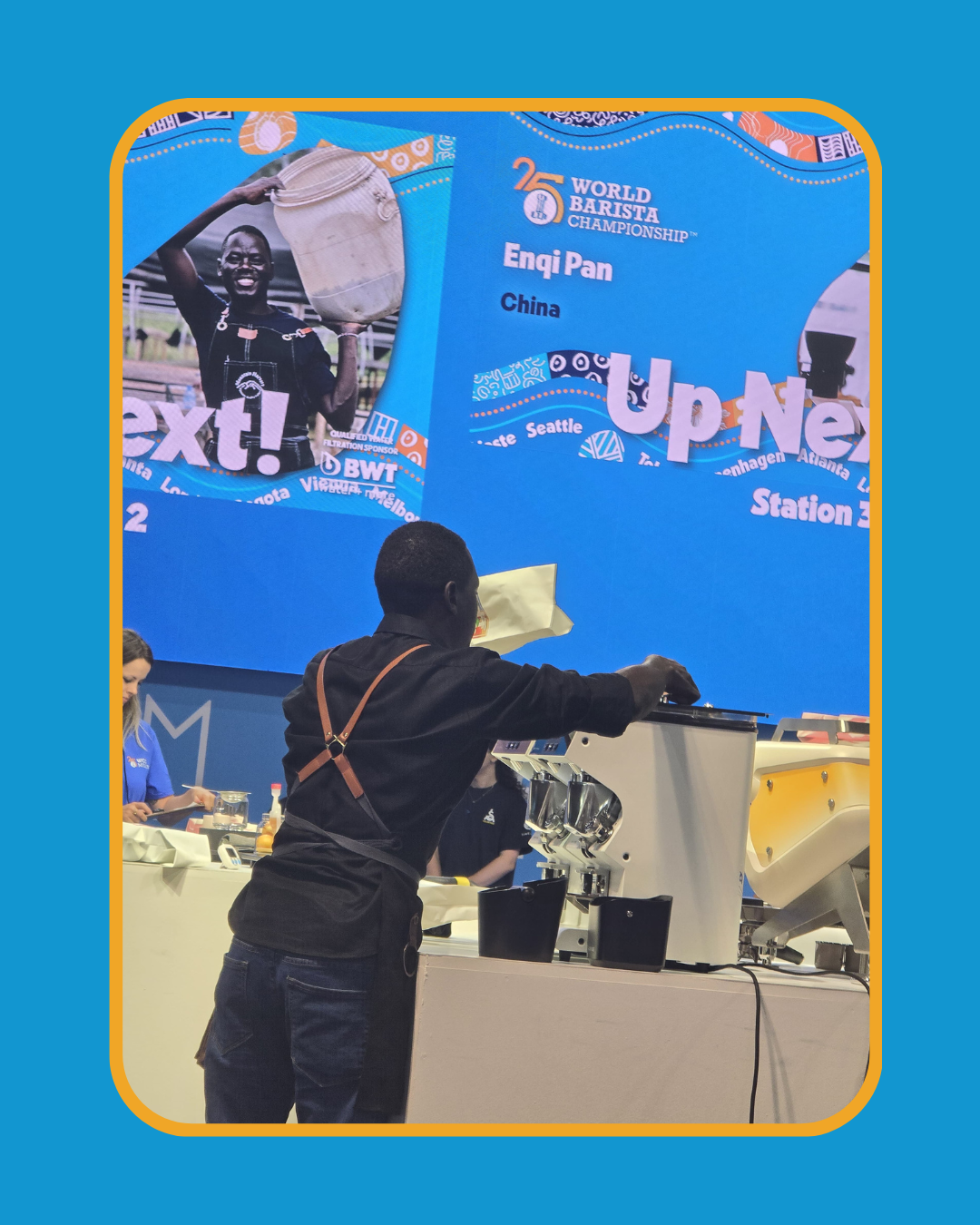
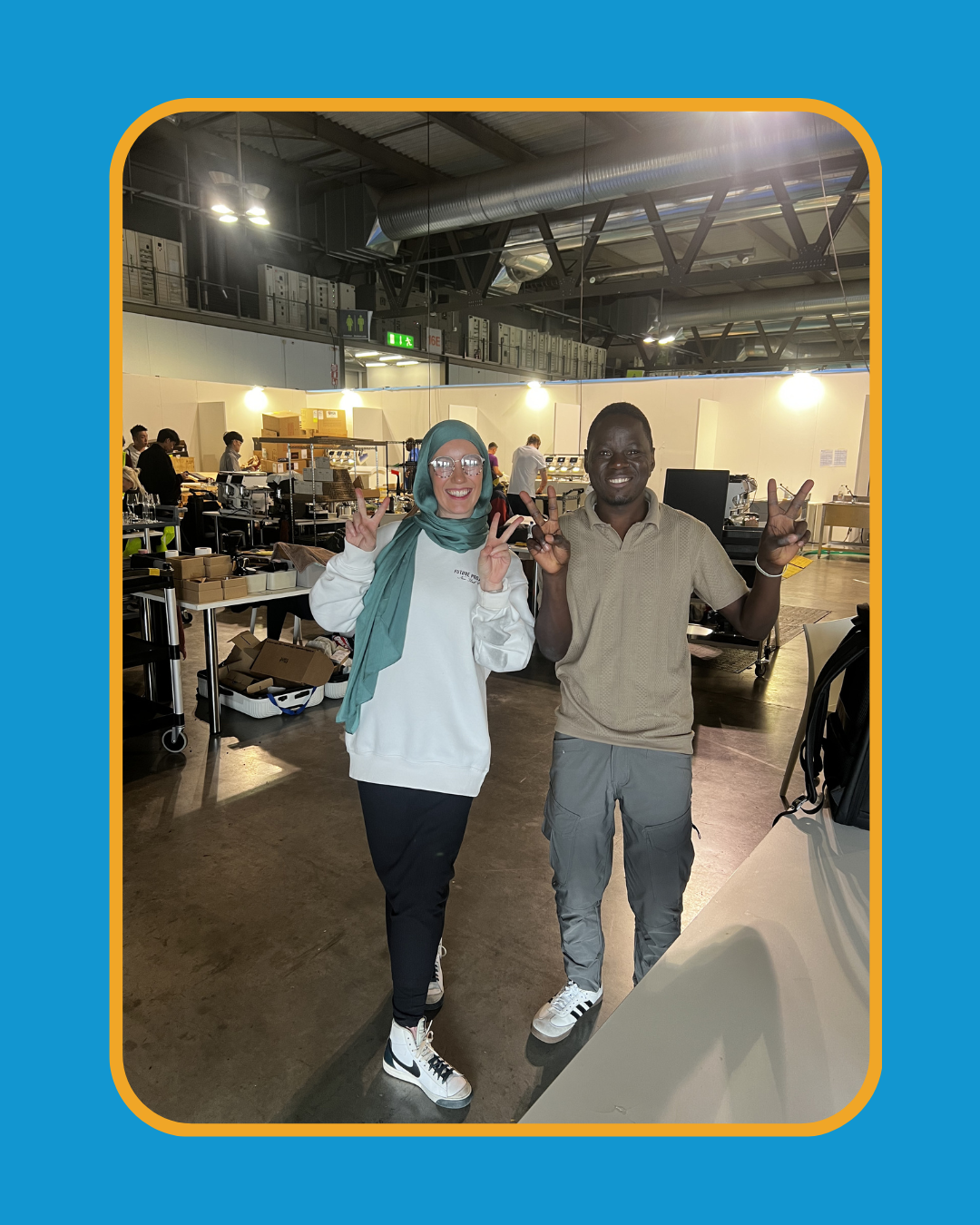
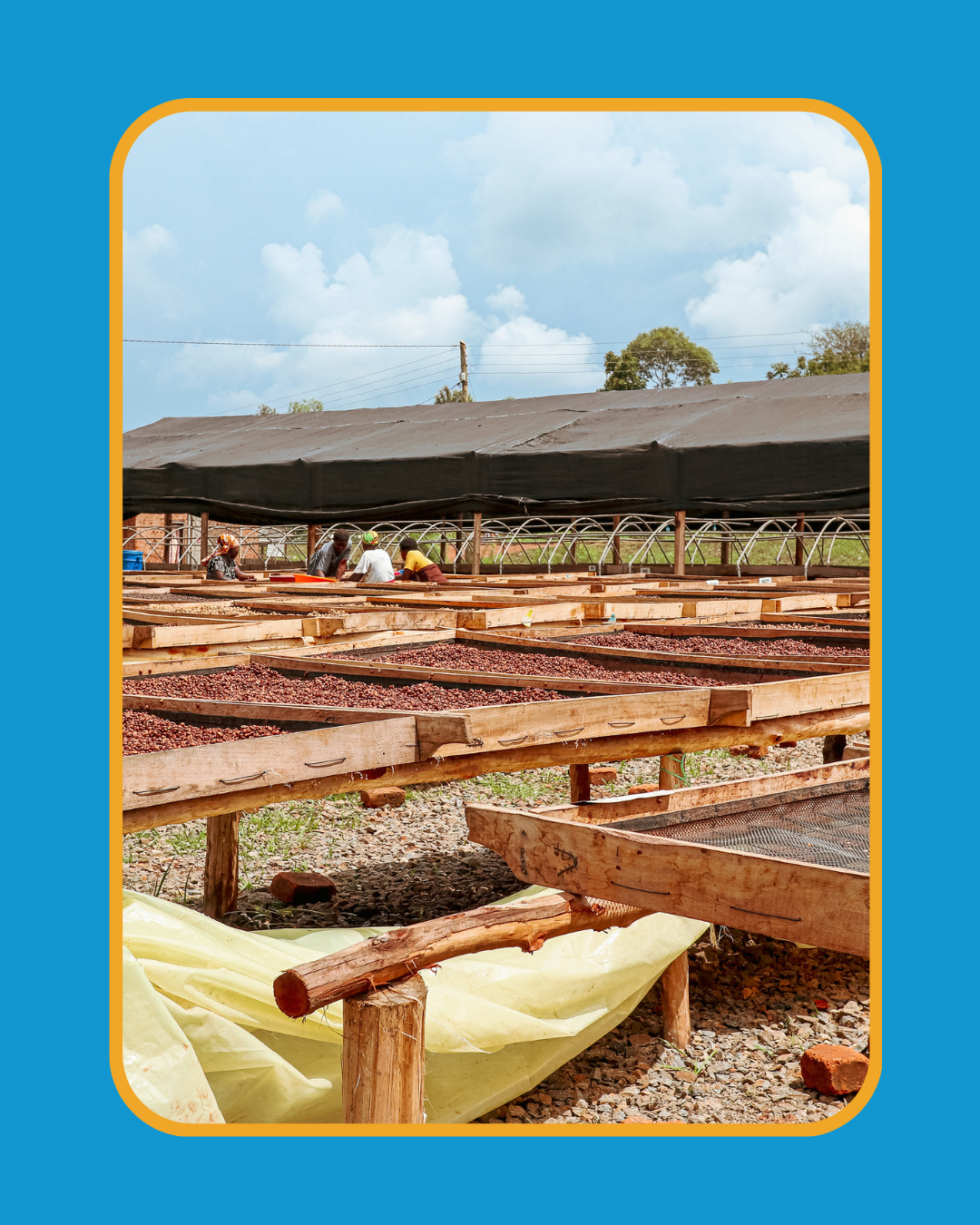
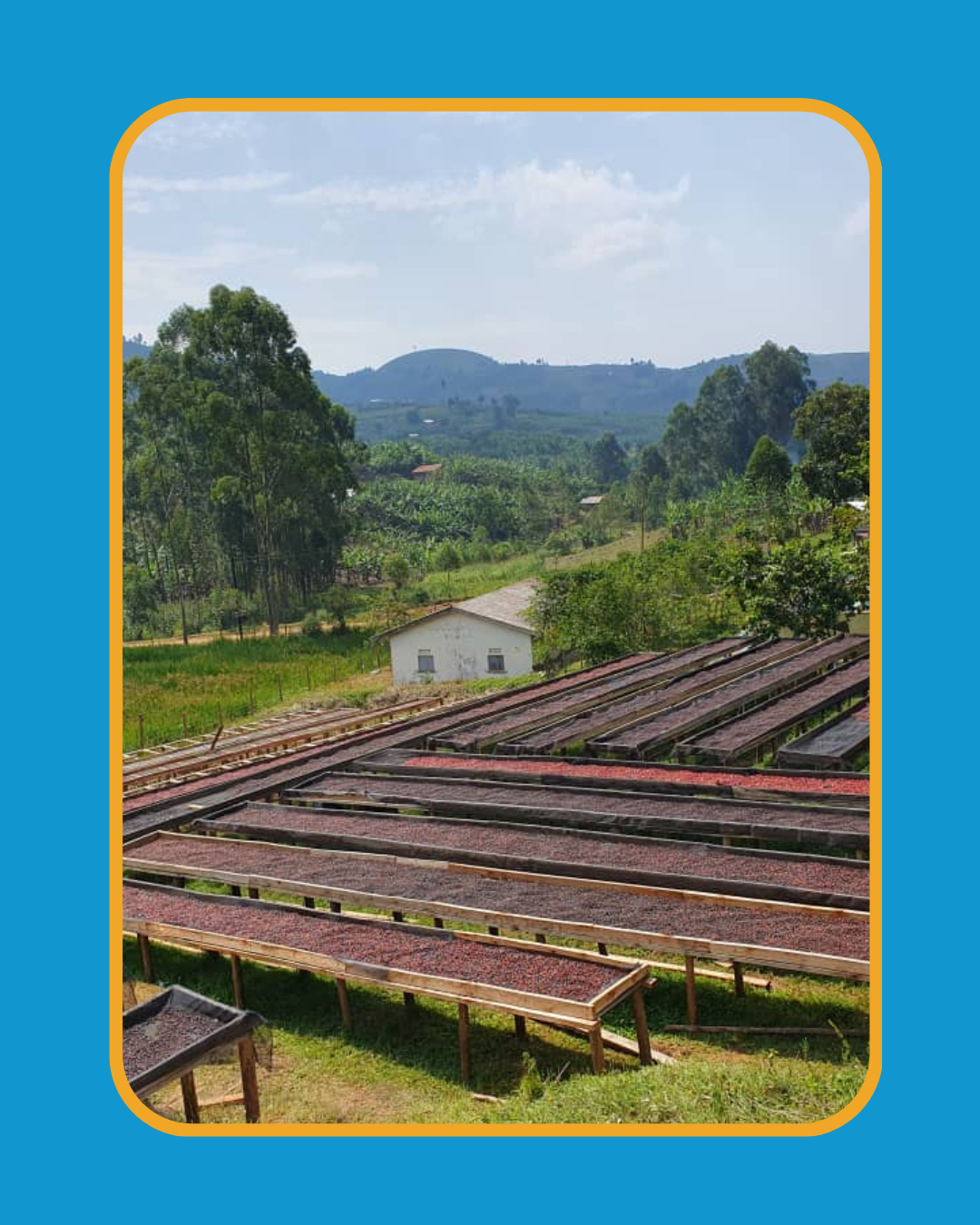
All photographs from Uganda featured in this post were taken by local Ugandan’s on behalf of Mountain Harvest- the photos from Milan were taken by our Ugandan Barista Team.
Uganda has a deep history of coffee. Robusta coffee grew and thrived in the forests surrounding Lake Victoria, with arabica being introduced much later. Uganda is now the largest coffee exporter in Africa:
There are 1.7 million coffee farmers in Uganda, and each of those farmers has more dependents, like family members, who rely on that income. 50% of the Ugandan population is under 18, with a national average age of 63 for coffee farmers. The cost of production is high for arabica coffee, and the farmgate price has long been incredibly low and unsustainable, with opaque business practices and little transparency or accountability.
In Brazil, a coffee tree yields an average of 2-4 kg of coffee cherry per year, but in Uganda the national average was around 0.4 kg per year. This shows the unrealised potential within the Ugandan coffee market.
For myself personally, I visited Uganda in 2020, where I heard more about the experiences of coffee producers. I learned that many Ugandan coffee producers had been taken advantage of by large traders and buyers. They would come and taste the coffee, agree contracts with strict terms which included a price and a bonus in the season between harvests. Then, when the coffee was delivered, the buyers would claim the coffee was not of the same quality as agreed and insist on reducing the price and not paying the bonuses that had been promised. Although I do not have references or names of these companies, this was a story that rang true for many coffee farmers. Coffee farmers were then beginning to dig up their trees as they were losing money, and coffee is not a crop they can consume themselves, so there is little purpose for it outside of sales.
It is no surprise then that the average age of coffee farmers is so high, as the way it is currently set up, coffee is not a viable industry for a young person looking for a future. Of course, this is only a few of the complex issues that intersect to create an uncertain future for the coffee industry in Uganda. We could talk all day about the implications of climate change too.
With a country where half the population is 17 and under, with coffee making up a large percentage of exports, with no agronomy universities teaching coffee, and with little access to education focused on the industry as a whole, why then do we think people would know how to invest? Uganda needs a Uganda model, a localised understanding of success. That is Mountain Harvest.
But I have to put in a disclaimer here towards my own personal bias. The Ugandan coffees I have tasted and roasted have been some of the most delicious coffees I have enjoyed. The washed coffees are clean and fruity, the naturals funky and jammy, and over the past few years we have seen a lot more come up on offer lists across the UK.
However, last year I was introduced to Mountain Harvest in Uganda and I was completely blown away by the work they are doing and their dedication to reshaping the future of Ugandan coffee, putting it on the map and into the cups of more people.
Founded in 2017, Mountain Harvest set out to prove that coffee could be better for everyone in the value chain. That includes the farmer, roaster, and the end consumer. Their mission stands strong, rooted in one belief:
“Better quality should mean better livelihoods”.
Prioritising Quality Over Commodity
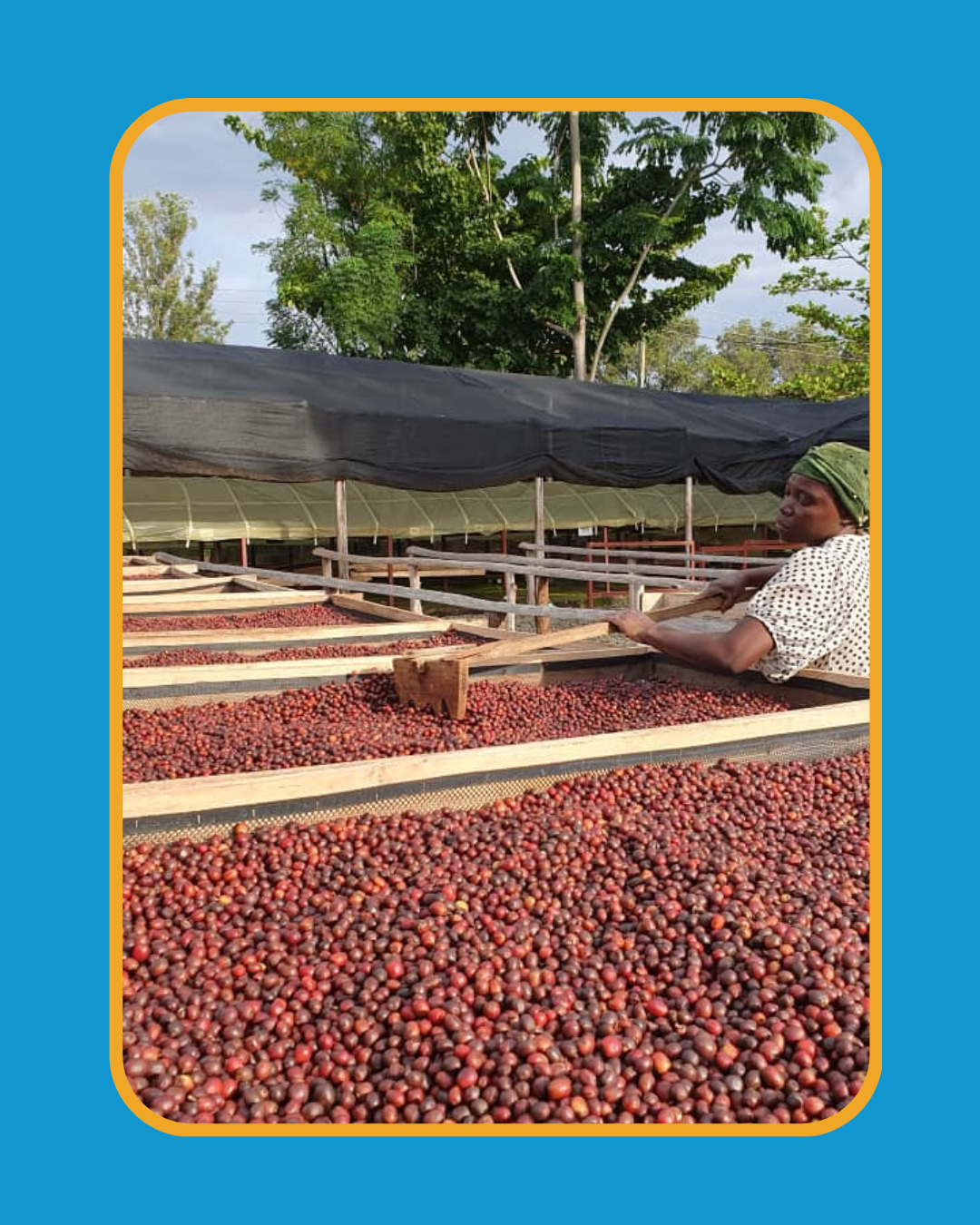
Rather than chasing large commercial volumes, Mountain Harvest curates an exquisite offer list. They work directly with smallholder farmers to improve harvest and processing methods through a suite of farmer services, designed in direct response to the unique challenges farmers face. These include:
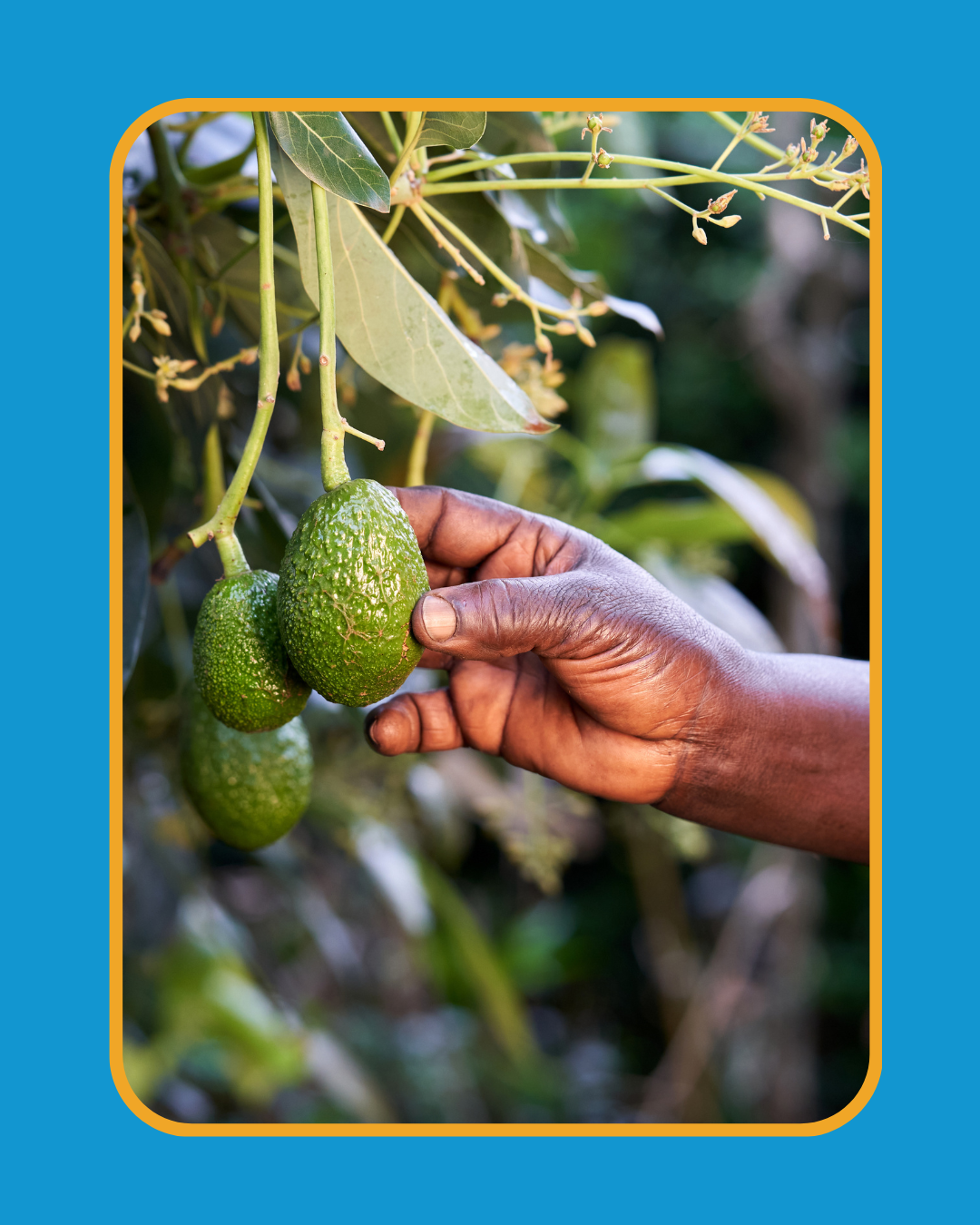
income diversification, including avocados, macadamia, honey hives, rabbits and cows
regenerative agriculture, including organic certification and education in soil and tree health
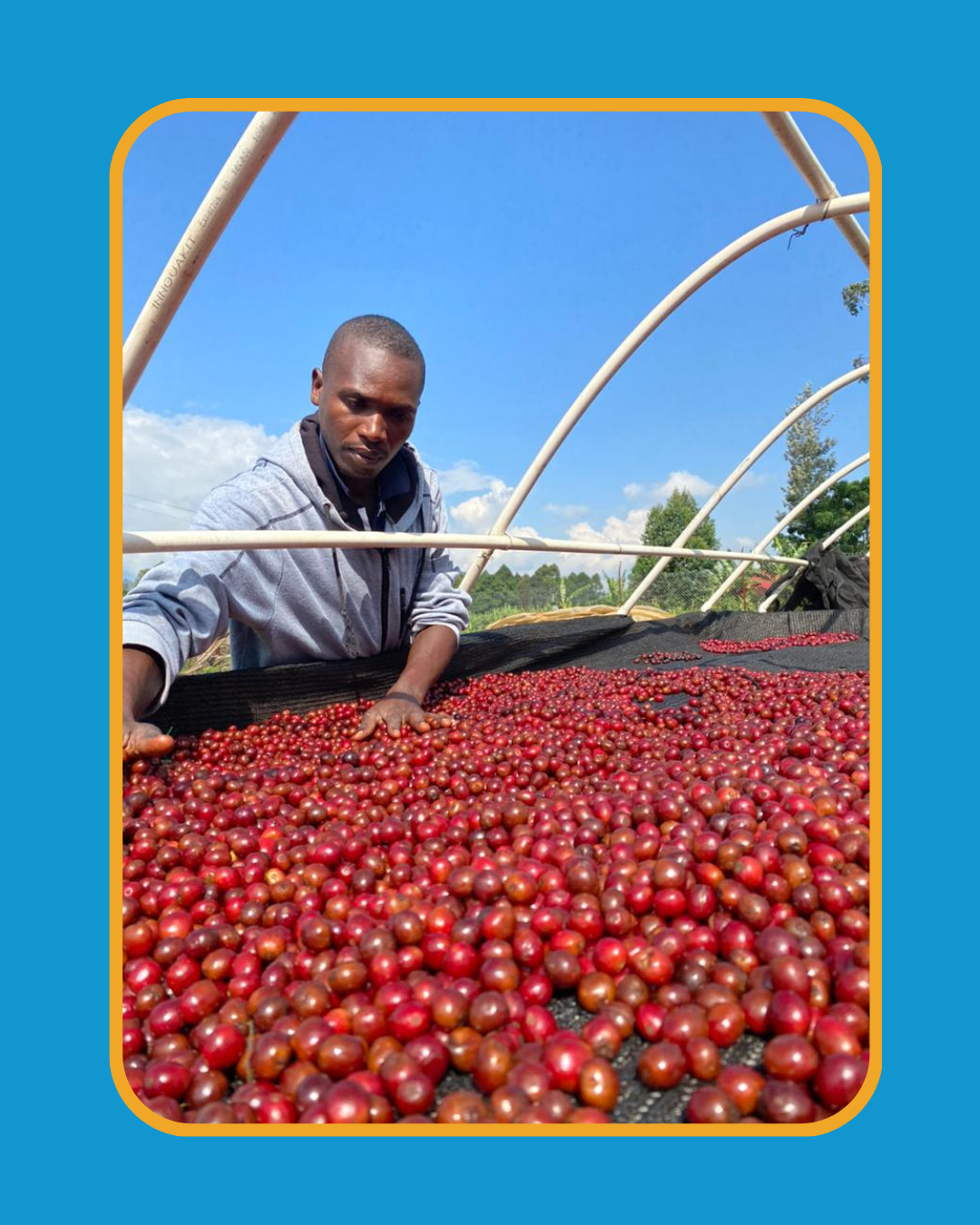
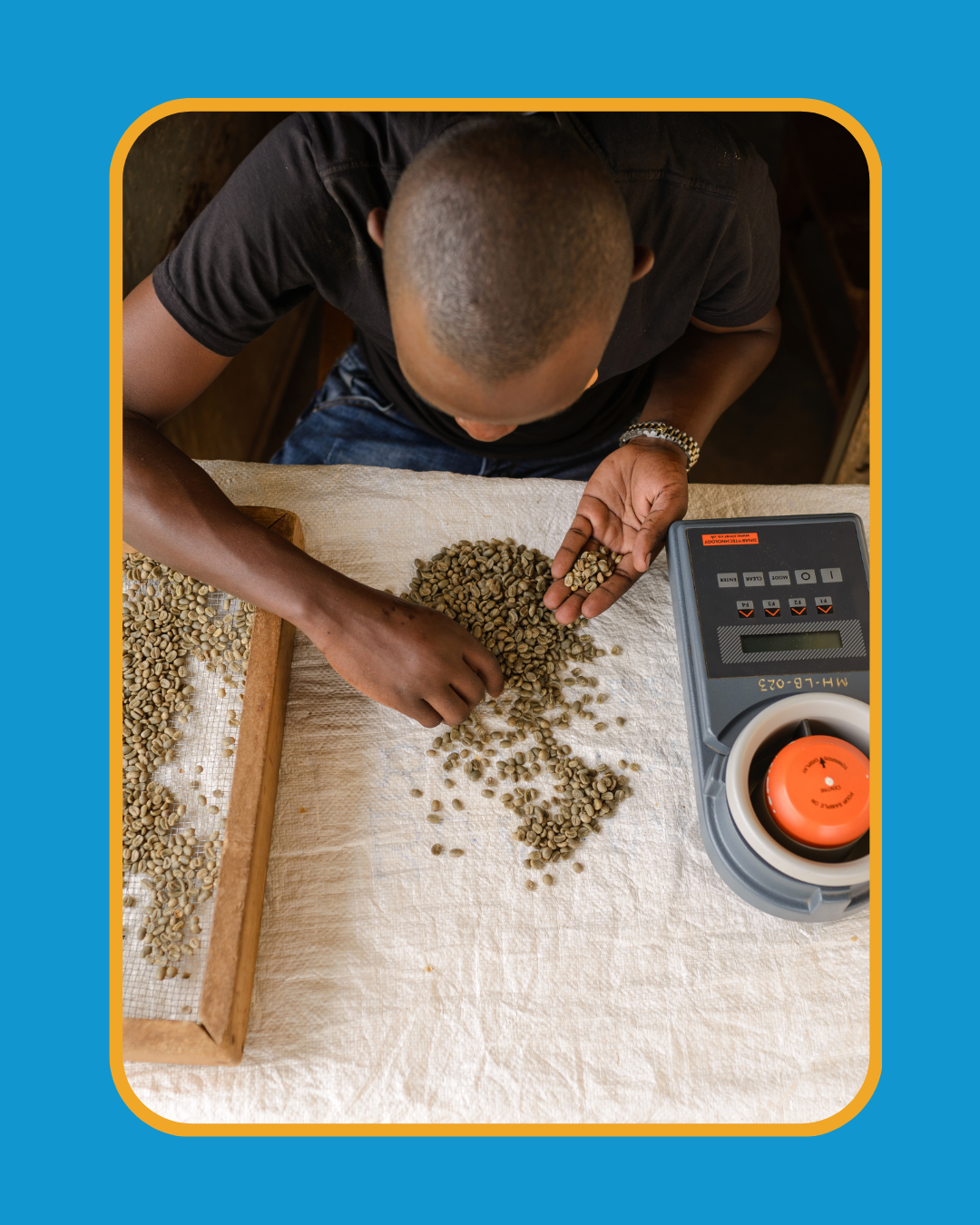
coffee quality, through quality-focused training, quality tools and the building of infrastructure
financial literacy and microfinance, including record keeping training, VSLA establishment and training, and access to flexible finance
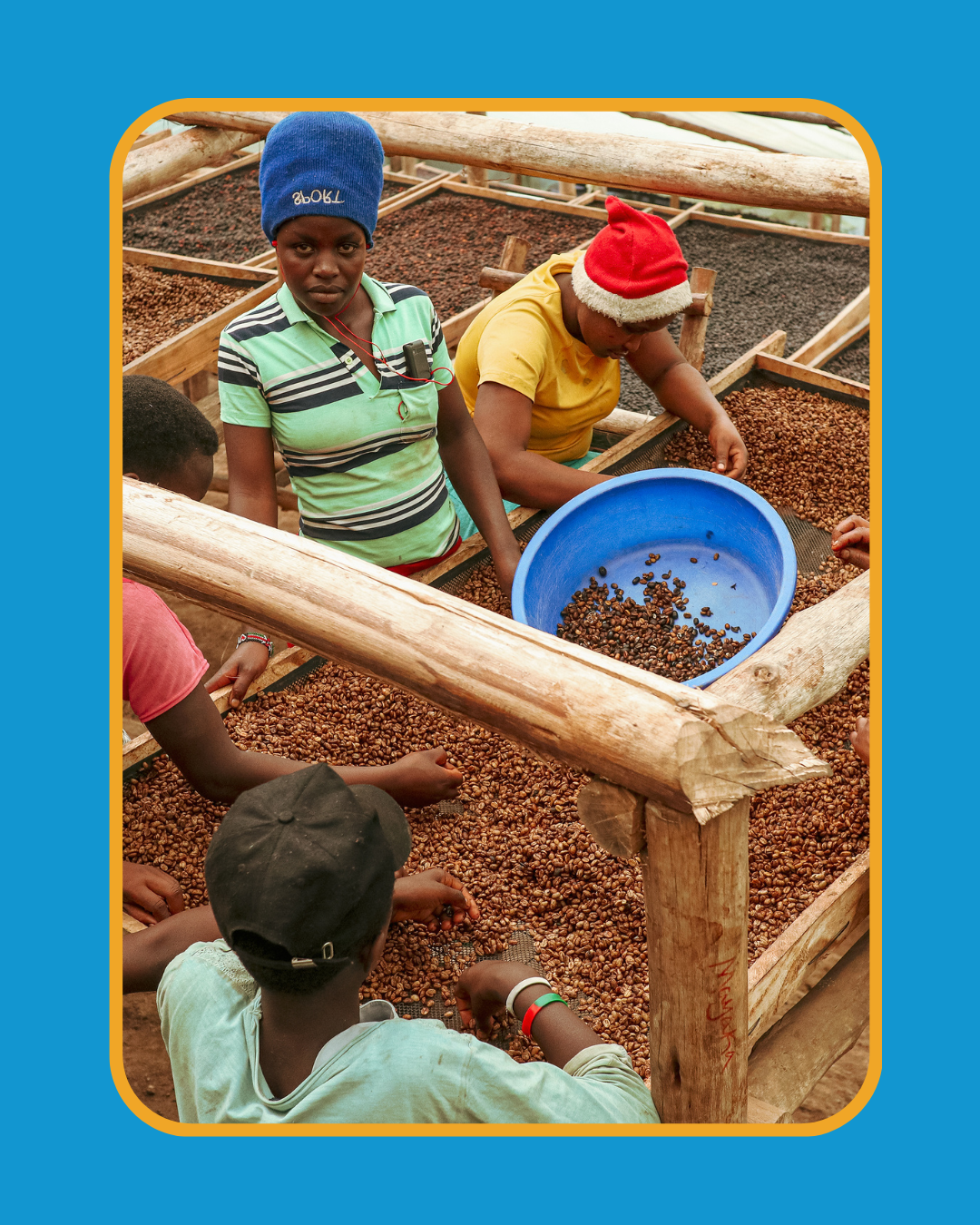
coffee business professionalism, through the professional picker programme, Youth Entrepreneur programme, coffee agronomy, quality, processing and data internships
Through this work, their coffees have consistently scored 84+ on the SCA cupping form. Their minimum goal is 84+, with coffees reaching 90+ in 2024. Uganda landed top Honey of all of Africa and 3rd place Natural for all of Africa for the first time in history, against countries like Ethiopia, in the Taste of Harvest Africa competition. In addition, their investment in young professionalism has led their staff to become Uganda’s Cup Taster and Barista Champions. Their coffees are just generally delicious and clean lots. Their microlots reach the high 80s and have won national and African competitions.
They have developed four clear coffee ranges:
Fundamentals – reliable, consistent, high-quality workhorse lots
Narratives – microlots with a community or story focus
Paradigm Shifters – classic processes done with full quality control
Innovation Series – experimental processes and collaborative research projects
Creating Jobs and Building Skills in Uganda
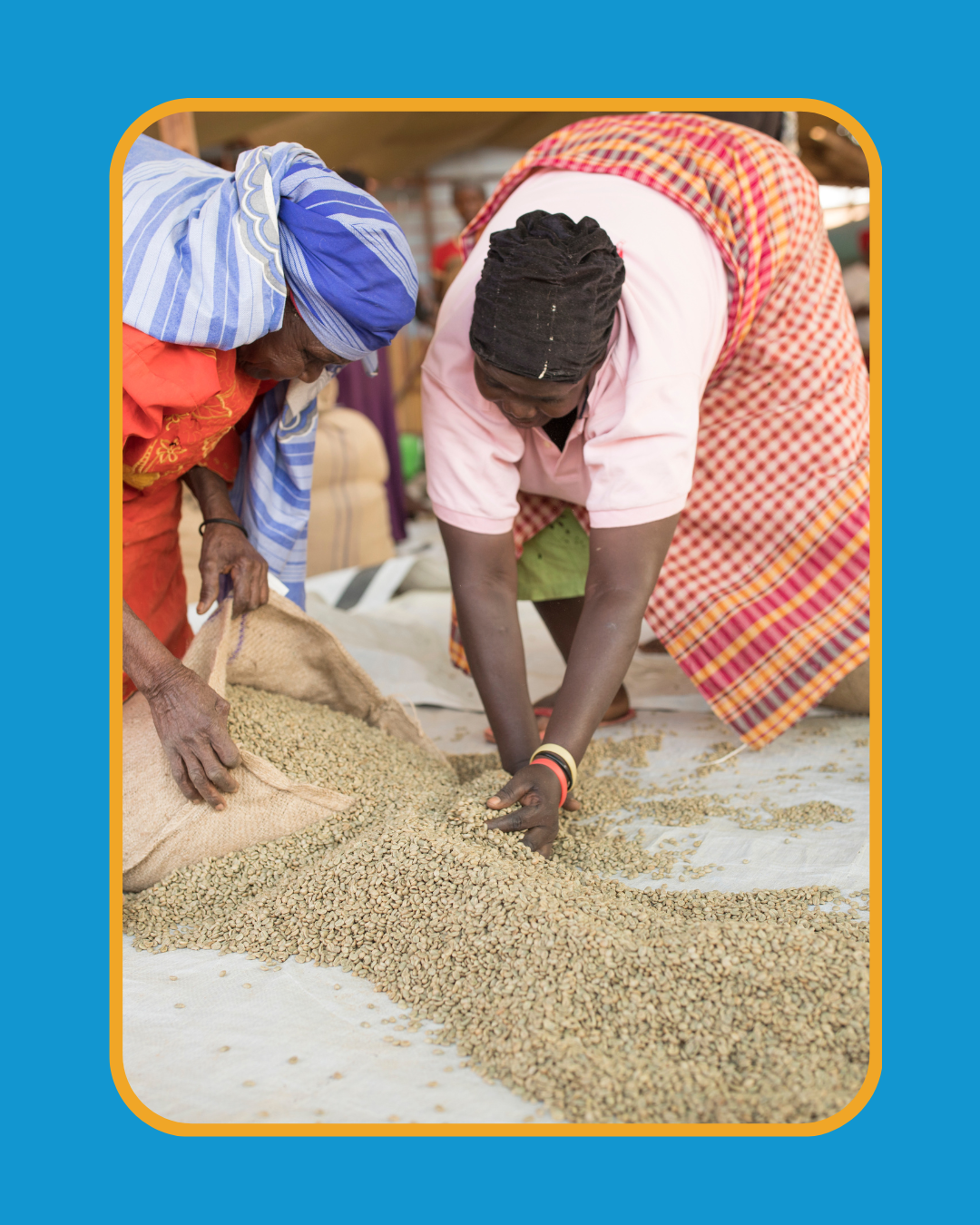
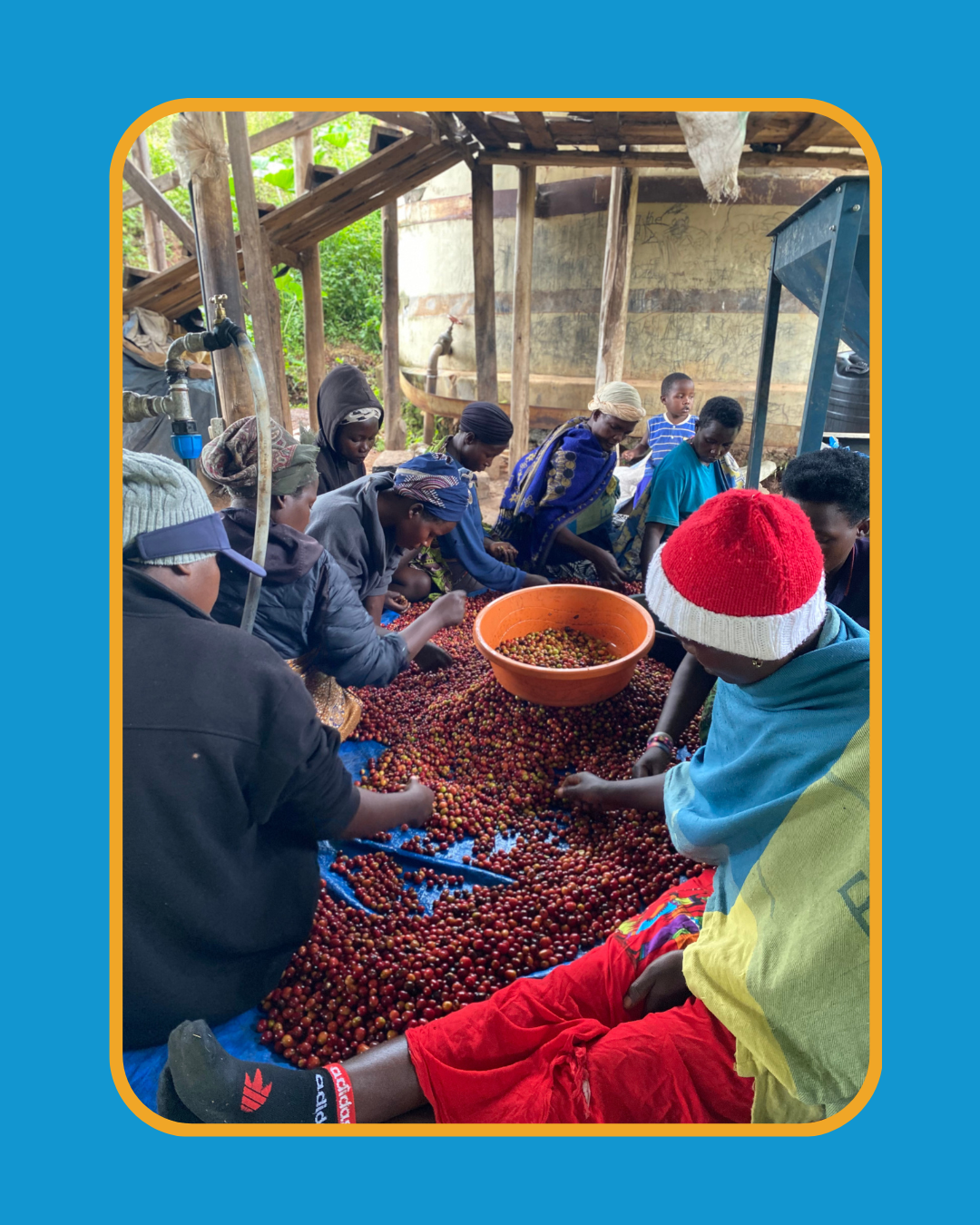
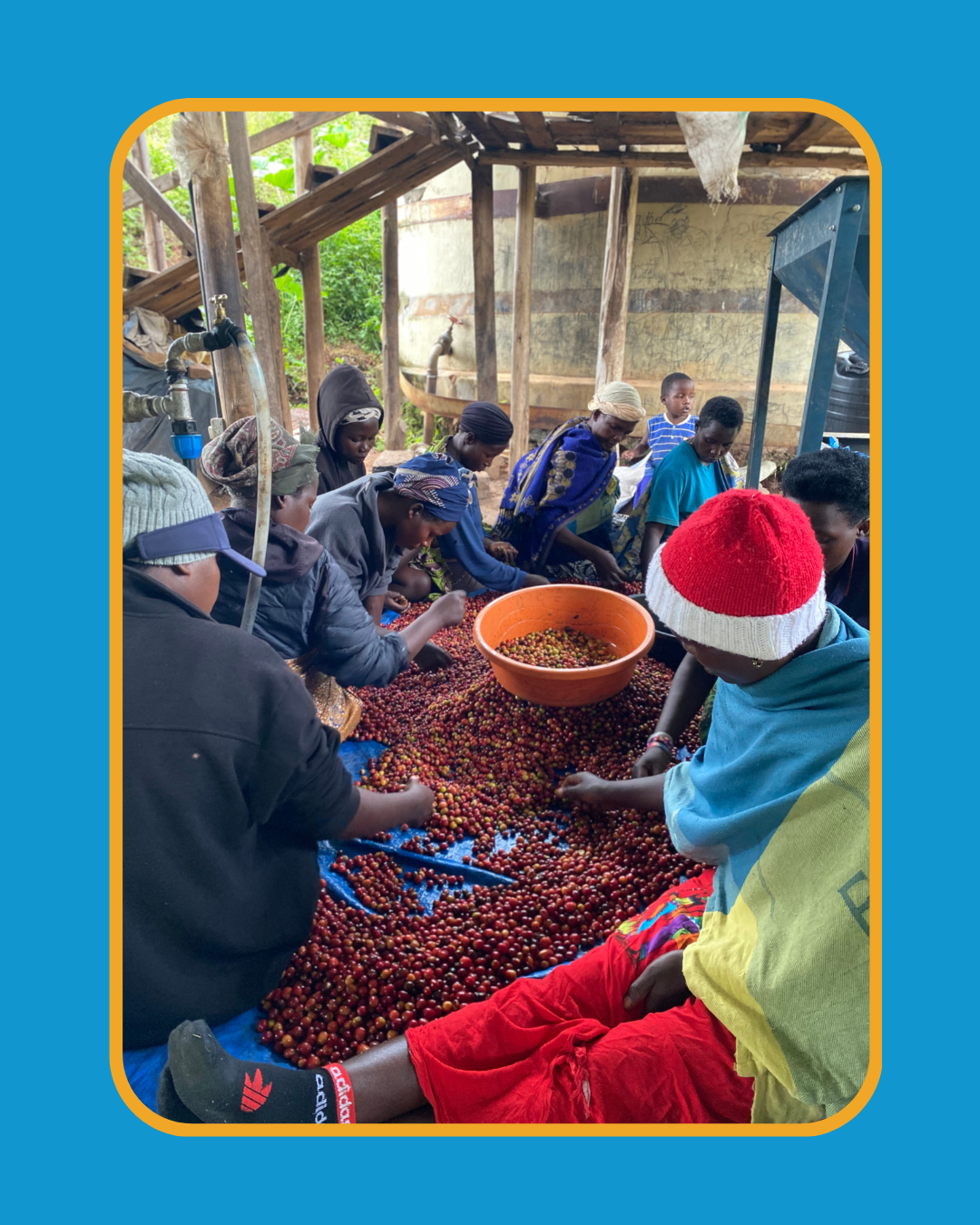
It is a crucial part of the economy in Uganda to hire seasonal workers to fulfil harvest requirements, and Mountain Harvest employs up to 200 seasonal workers, such as the 100 women who hand sort each bag of green coffee. Mountain Harvest has invested in understanding how to provide services even to those outside of the smallholder farmer groups because, true to their values, all links in the supply chain are important.
Beyond this, Mountain Harvest has built a permanent team of 54 full-time staff members who are meant to be leaders of the Ugandan industry. 98% of them are Ugandan, with most of them under 30. They have processing managers, certification managers, quality managers, project managers, agronomists and administrators. They also run a paid internship for graduates in areas like agronomy and quality control. Not only does this create stable jobs, providing young people with pathways into the coffee industry, but it shows coffee as a valid and successful career option, helping make coffee more sustainable by ensuring a new generation of skilled coffee professionals in Uganda.
For coffee professionals in the UK, it can be quite an aspirational career with many opportunities for development. We have opportunities, despite the discourse surrounding career progression and lack of accessibility, to compete, take courses, gain certifications, and access different parts of the market through events and networking. There has not always been the same access to these opportunities for professionals from origin countries, not to mention the discrepancy in respect for professionals from origin countries too.
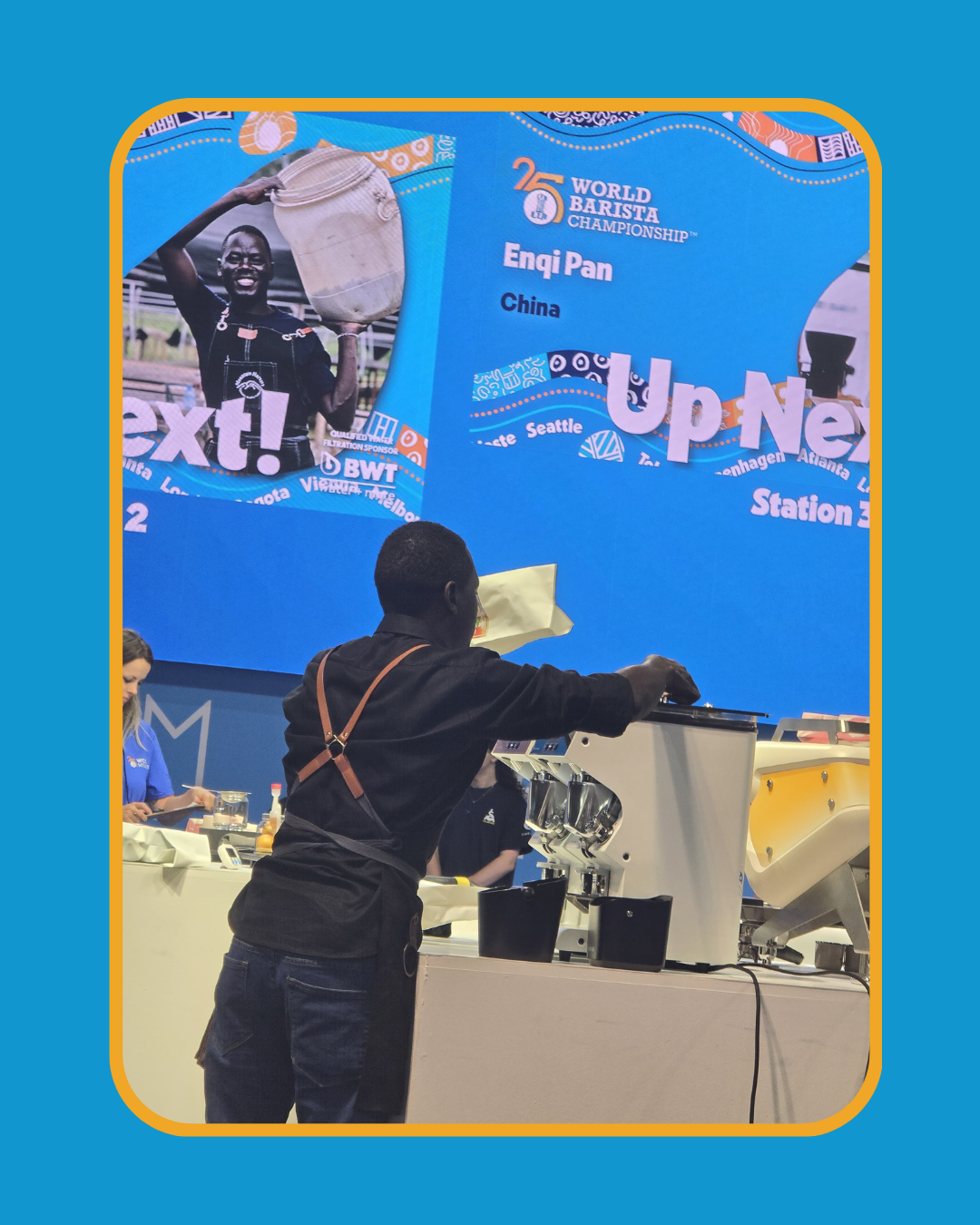
The team at Mountain Harvest are actively encouraged to explore the industry, experiment with processes using best practices, and engage in competitions. This includes entering coffees into national competitions, but also engaging with World Coffee Events competitions too. Their Processing Manager, Ibrahim, has won the Ugandan Barista Competition twice and competed in the World Barista Championships in October 2025 with Mountain Harvest coffee.
Ibrahim also collaborated with a roaster in the USA, who competed in the US Brewers Cup with the same Mountain Harvest coffee and roasted the coffee for Ibrahim’s competition too. In October I joined Ibra in Italy to be part of his competition team, roasting his coffee and supporting him as a coach for the World Barista Championship at Host Milan.
Founded by Kenneth Bariyage, Mountain Harvest aims to utilise and promote Ugandan excellence throughout the whole business model, hiring Ugandan photographers for marketing and using Ugandan technicians for software and systems development.
A Social Enterprise Model
Mountain Harvest pays 15-30% above local market prices depending on raw material type, whether parchment or cherry, as an attempt to break from the volatile C-market, and they invest that back into projects to improve livelihoods and ensure sustainability.
Not only have they built a programme for quality assurance and processing infrastructure, but they have also been involved in research from across the globe. All of this is focused on using it as a model to help more farmers across Uganda improve the quality of their coffee.
Other projects include regenerative agriculture and soil restoration, which increased the yield per tree, income diversification including macadamia, avocados, beekeeping and livestock, even rabbits. They have developed financial literacy classes and a microloan provision with a 98% repayment rate. A huge focus has been on gender equity programmes, which have boosted women’s participation from 11-35%.
The Power in Empowering Women
Typically, men are registered as the “farmer” of the land, gaining access to training, finance programming, and the cash coming in from coffee deliveries. This is because, traditionally, they are the landowners. Yet the household member who is doing the labour of the coffee farm is, generally speaking, the women of the household. They are tilling, weeding, planting, picking, and more. But because they are not the land title owner, they do not get registered as part of the system. The management team at Mountain Harvest believed they could shift this narrative by strategically changing some simple parts of their sourcing strategy to encourage greater involvement of women.
As women were not involved in transactions, they had little personal investment in improving the quality of the crop.
Meetings and training were often held outside of the local area for women, and at times that were difficult for them to attend. Engagement levels with women in the communities were extremely low.
Community-focused staff noticed this and suggested that rather than trying to draw women to the meetings, which would not have worked in that cultural context, they should increase the number of meetings and hold them in locations where women could attend. They went into the villages instead of holding training in a space that women would have to travel to, away from children and the household.
There is also the concept of time poverty for women. So instead of pressuring women to take on more unpaid labour, they wanted to make training and education easier to access. So they:
held training closer to the homesteads
held it at times that did not compete with the traditional chores of women
changed who could be considered a “farmer”
Traditionally, men gain land title through inheritance. Women do not get land through inheritance, but they do lease land. Mountain Harvest made it possible for women who lease land to be officially registered farmers within their associations. In addition, they invest in women leaders within their management structure so that women can learn from other successful women.
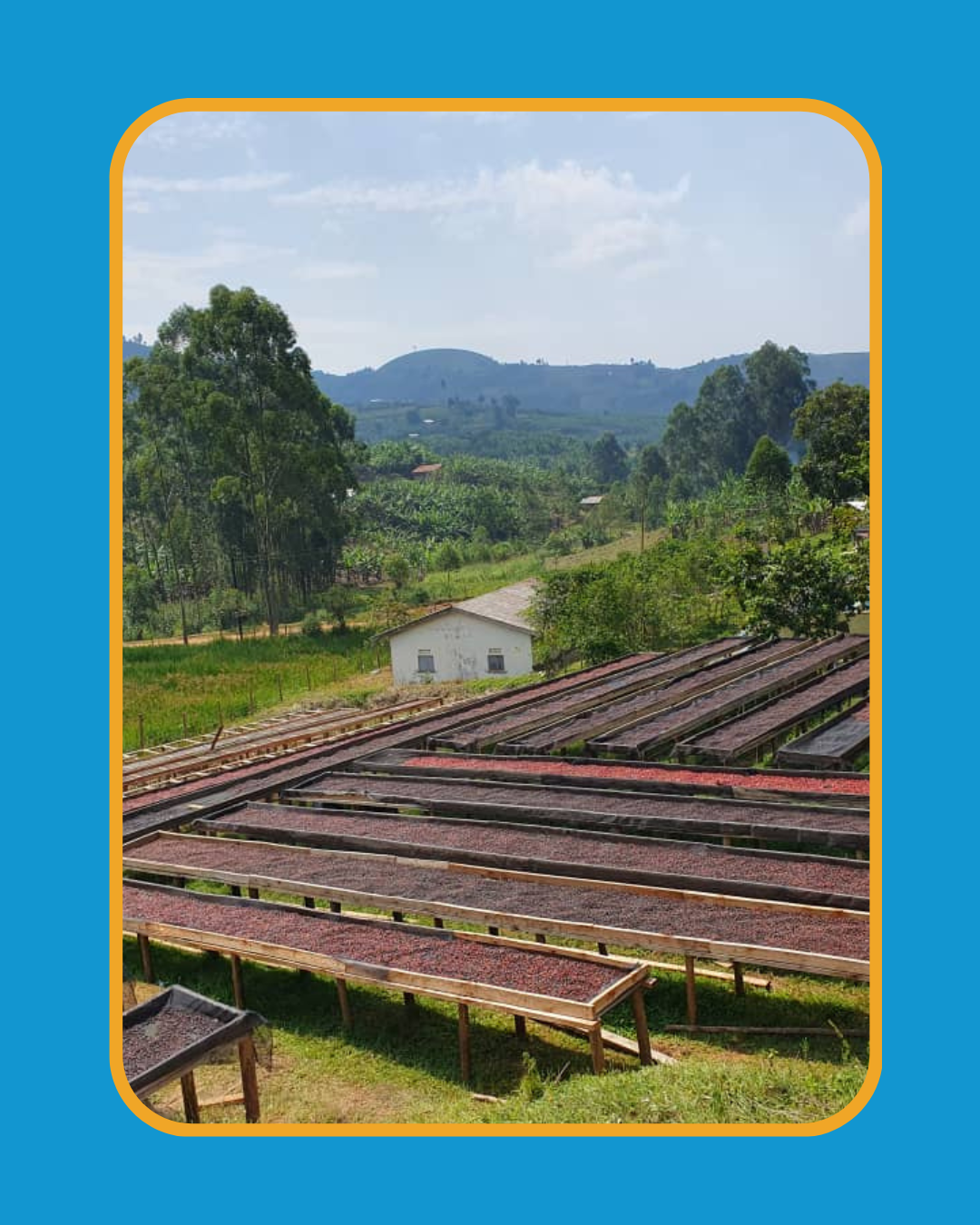
The women were all really keen to invest effort into improving their practices and excited to see the results in the cup and in the price they could earn for their coffee. This year a group of women put their coffee into the AFCA Taste of Harvest and it won first prize for honey in Uganda and then first place for the best honey in the whole continent of Africa.
Of course, Mountain Harvest also placed in Washed and Naturals at national and international level too. But a first place continental honey prize summarises the power of empowered women. When women level up together, they do so with excellence and vision, not mediocrity.

As Nico, Operations Director, put it:
“AFCA’s Taste of Harvest holds country-based and continent-level coffee competitions. We completely sweep Uganda’s competition. But we also won 1st Place Honey, which was a women’s coffee out of our micro washing station, Kajere Station. Any intro to international development course will tell you that women are the powerful force behind ensuring a household’s income or business is returned back into the family. They are great business people. So why can’t they be good at coffee business? Turns out, they kill it.”
Why This Matters
By focusing on quality, paying fair prices, and creating skilled jobs in Uganda, Mountain Harvest is showing that coffee can be a driver of lasting change. They are proving that when you put people and quality first, you can lift an entire origin’s reputation and its communities at the same time.
Mountain Harvest now works with over ~1,500 in Elgon, ~1,000 in Rwenzori, and ~300 in Kigezi. They have a goal to reach 5,000 smallholder farmers with their services by 2028, offering agronomy training, pre-financing, and access to processing infrastructure. Their controlled fermentation, centralised drying, and strict quality protocols have helped shift Uganda’s reputation for inconsistency. For roasters, this means the kinds of clean, expressive coffees we want on our menus, with the reliability and traceability we need to build long-term sourcing relationships.
Conclusion
Mountain Harvest shows us that origin development is not about charity or chasing volume. It is about building professional systems, investing in people, and respecting coffee as a craft at every stage of the chain. For roasters and buyers, Uganda is no longer an “emerging” origin, but one setting benchmarks for quality, consistency, and innovation.
And crucially, that excellence is inseparable from social impact. Fair pay makes quality possible. Young people choosing coffee as a career keeps innovation alive. Equity, especially for women, is what ensures sustainability for the long term. As peers in this industry, our role is to recognise and reward that excellence so that Uganda’s story is not one of decline, but of resilience, excellence, and what becomes possible when coffee is truly a shared endeavour.
If this has made you as excited about Mountain Harvest as it has made me, we have just released three of their coffees on the Hope Espresso website. These are coffees that carry all of this work, care and excellence in the cup, and I am so proud to be roasting and sharing them. You can shop them here and taste for yourself what Mountain Harvest is building in Uganda. Scroll to purchase or see more photos!
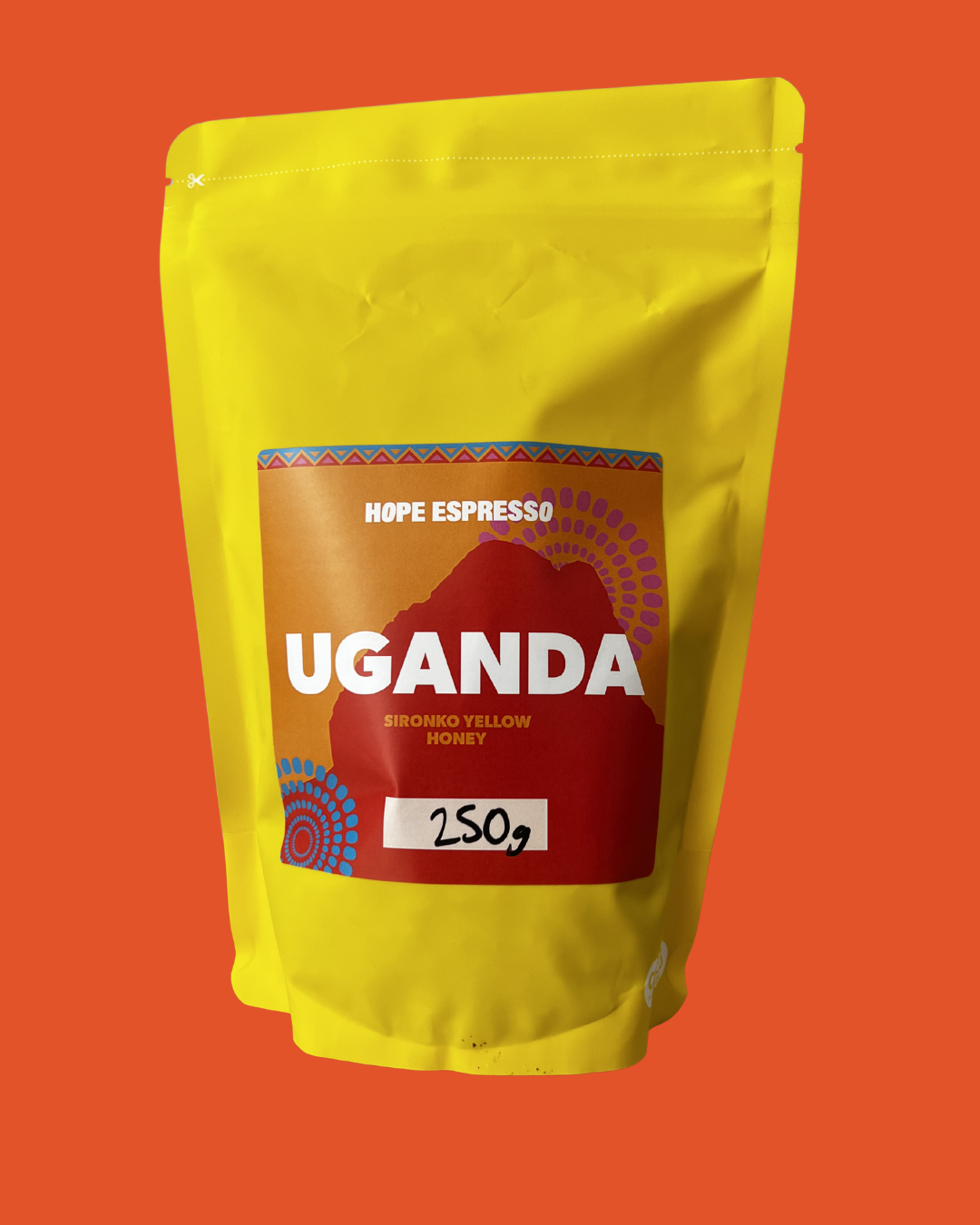
Uganda Sironko Yellow Honey
We are so excited to share this coffee.
Our Uganda Sironko Yellow Honey comes from Sironko Station, Mountain Harvest, on the slopes of Mount Elgon, Uganda, grown at 1600–2200 metres above sea level. It is a beautiful yellow honey processed coffee made up of Nyasaland, SL14 and SL28, with tasting notes of berry, cocoa and black tea.
In the cup, this coffee is vibrant, sweet and beautifully balanced. You can expect juicy berry notes up front, a gentle cocoa richness through the middle, and a clean black tea finish that gives the whole cup elegance and structure. It is expressive enough to feel special, but approachable enough to enjoy every day.
This coffee means a lot to us not only because it tastes incredible, but because of the people behind it. We love the work of Mountain Harvest and the care they put into producing coffees that are full of character and integrity. We were also honoured to support the Ugandan Barista Champion in the 2025 World Barista Championship in Milan as part of the Mountain Harvest team — and even more special, he is the manager of Sironko Station. That connection makes this coffee feel even closer to our hearts.
For us, this is more than a delicious coffee. It is a celebration of skill, hard work, partnership and the incredible potential of Ugandan coffee. We are proud to roast it and even prouder to share it with you.
Tasting notes: Berry, cocoa, black tea
Process: Yellow honey
Varieties: Nyasaland, SL14, SL28
Origin: Mount Elgon, Uganda
Producer: Sironko Station, Mountain Harvest
Altitude: 1600–2200 masl
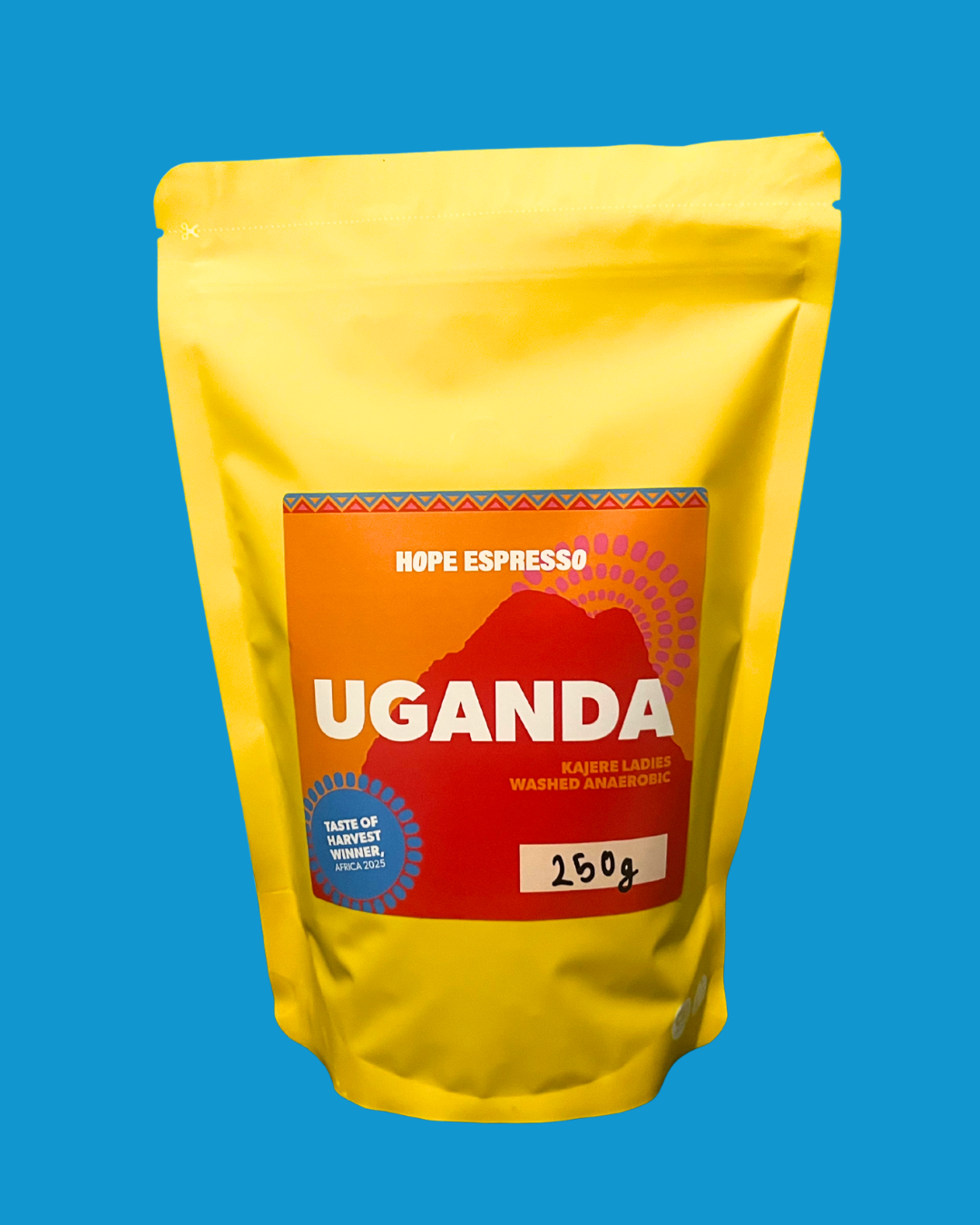
Uganda Kajere Ladies Washed Anaerobic
We are incredibly proud to share this coffee.
Uganda Kajere Ladies Washed Anaerobic comes from the Kajere women’s farmer group in the Kajere Community Zone on Mount Elgon, Uganda, and was processed by Mountain Harvest at Kajere Station. Grown at 1900–2000 masl and made up of SL14 and SL28, this is a coffee that brings together precision, dedication and real innovation.
In the cup, expect berries, brown sugar and mango. It is expressive, elegant and layered, with the kind of sweetness and clarity that keeps drawing you back for another sip.
What makes this coffee especially exciting is the process. Only cherries meeting strict selection standards were chosen before undergoing 14 days of whole cherry dry anaerobic fermentation. After pulping, the coffee was returned to sealed barrels for a further 48 hours of dry anaerobic parchment fermentation, before being washed and solar dried. The result is a coffee that feels vibrant and distinctive, while still beautifully clean in the cup.
This lot also carries an extraordinary story. Sourced from the Kajere women’s farmer group in North Elgon, it reflects intentional work to create more opportunities for women in coffee. Mountain Harvest has invested deeply in the Kajere Community Zone, supporting farmers not only through coffee processing and quality training, but also through income diversification, regenerative agriculture and financial literacy. That long-term commitment is part of what makes coffees like this possible.
And then there is the recognition. This coffee earned 2nd Place in the 2025 Uganda Taste of Harvest Washed Category, and comes from the same dedicated team behind the 1st Place 2025 Africa Honey winner. For us, that makes this coffee more than delicious — it is proof of what happens when knowledge, infrastructure, collaboration and care all come together.
At Hope Espresso, we love coffees that tell the truth about what is possible, and this one does exactly that. It challenges tired ideas about Ugandan coffee and replaces them with something far more exciting: stability, beauty, complexity and excellence.
Tasting notes: Berries, brown sugar, mango
Process: Washed extended anaerobic fermentation
Varieties: SL14, SL28
Origin: Mount Elgon, Uganda
Station: Kajere
Communities: Kajere, Gombe
Altitude: 1900–2000 masl
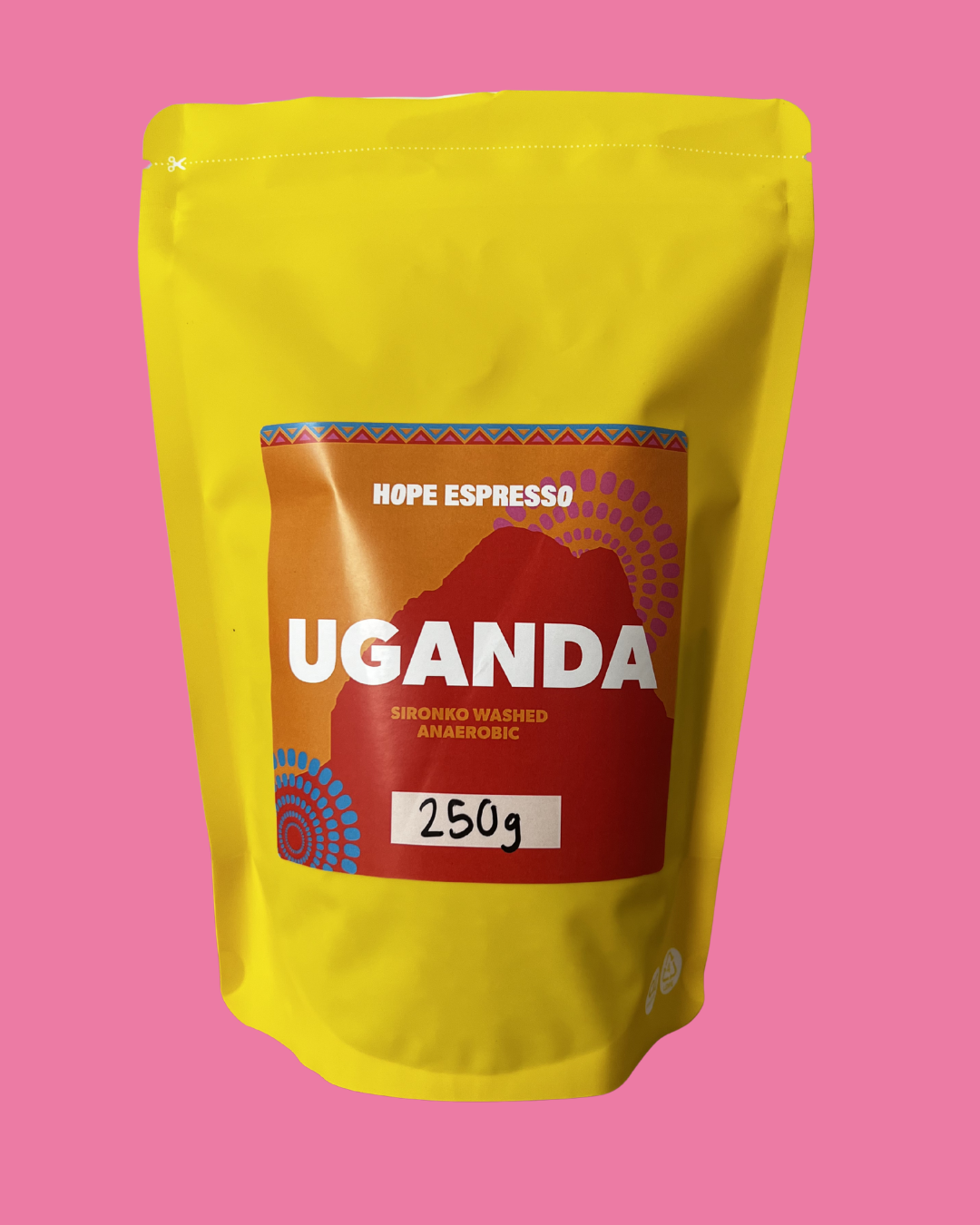
Uganda Sironko Washed Anaerobic
We are so excited to share this coffee.
Uganda Sironko Washed Anaerobic comes from Sironko Station, Mountain Harvest on Mount Elgon, Eastern Uganda. Sourced from red ripe cherry grown by certified farmers across Northern Mount Elgon, this coffee brings together Nyasaland, SL14 and SL28 and showcases the creativity, care and precision behind Mountain Harvest’s Innovation Series.
In the cup, expect tropical fruits, milk chocolate and citrus. It is bright, sweet and beautifully expressive, with layers of fruit balanced by creamy chocolate notes and a lively, sparkling finish.
This coffee is especially exciting because it reflects Mountain Harvest’s commitment to pushing Ugandan coffee forward. As part of their Innovation Series, this lot was created to explore new flavour profiles and new processing approaches within the Ugandan context. At Sironko Station, Mountain Harvest’s central hub for research and innovation, Ibrahim Kiganda and his team use carefully tested protocols, strong infrastructure and years of processing data to produce coffees with clarity, stability and character.
The cherries for this lot were sourced from farming communities across Northern Mount Elgon, including Kajere, Sipi, Yilwanako-Mayiyi, Bukalasi and Buginyanya. Behind that is a network of 850 Mountain Harvest smallholder farmers, 47% of whom are women, all supported through services including income diversification, financial literacy, regenerative agriculture, microfinance and a professional picking programme. That wider ecosystem of support is part of what helps coffees like this shine.
At Hope Espresso, we love coffees that are full of life and full of purpose, and this one is exactly that. It is a joyful, innovative and beautifully crafted coffee that celebrates what is possible when quality, experimentation and community all come together.
Tasting notes: Tropical fruits, milk chocolate, citrus
Process: Washed anaerobic fermentation
Varieties: Nyasaland, SL14, SL28
Origin: Mount Elgon, Eastern Uganda
Producer: Sironko Station, Mountain Harvest
Altitude: 1900–2000 masl